
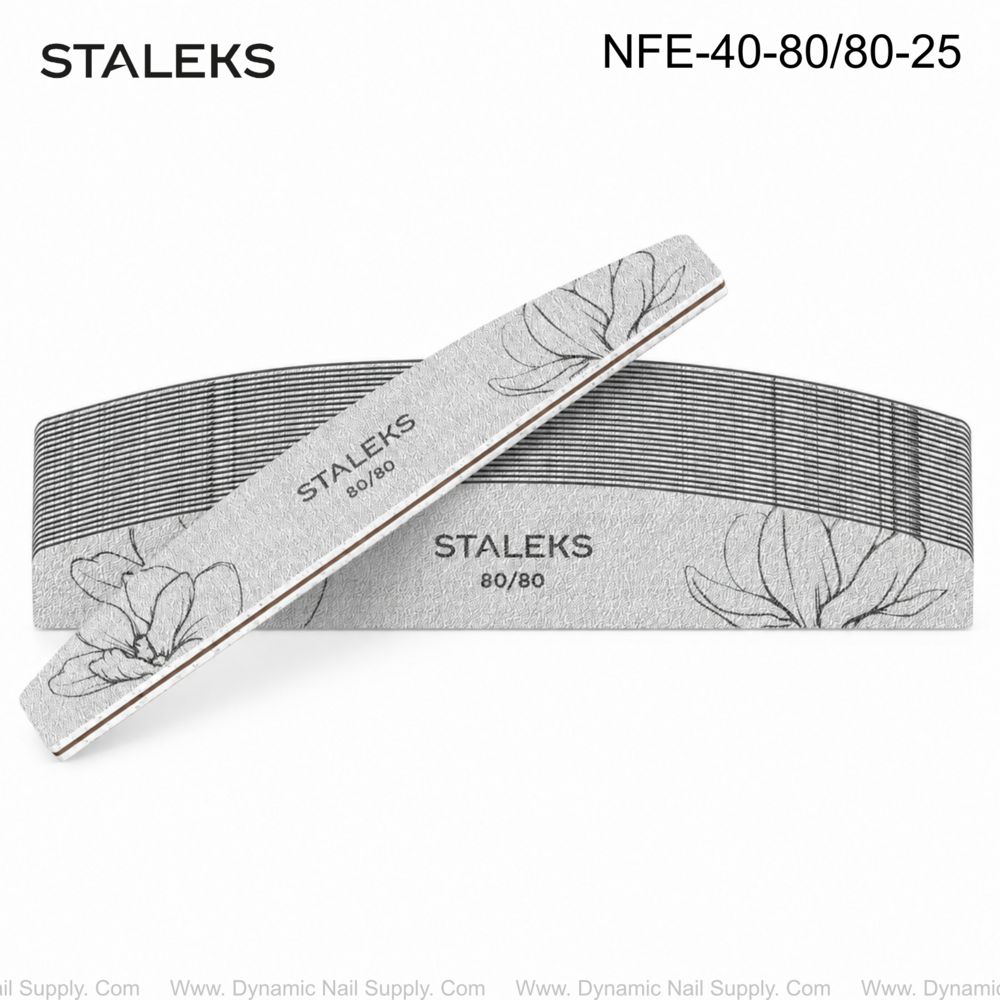
Want faster, cleaner shaping of artificial nails whether you’re working in a salon or doing your own enhancements at home? A coarse 80/80 crescent mineral nail file delivers aggressive material removal while the curved profile helps you follow natural contours. This guide shows how to get professional results using the file’s two surfaces, foam-backed flexibility, and clog-resistant abrasive.
What makes the crescent mineral nail file useful?
The tool is a mineral abrasive file with 80/80 grit on both working faces, designed for rapid shortening and reshaping of gel and acrylic enhancements. The crescent shape combines a curved edge for sidewall and cuticle-area access with a straight edge for free-edge finishing. Beneath the abrasive is a soft foam layer that cushions pressure, and a flexible plastic base that conforms slightly to filing angles for better control. A special surface treatment helps keep the abrasive working longer by reducing clogging with organic dust.
Step-by-step filing technique for artificial nails
Follow this sequence to remove length and refine shape efficiently while minimizing damage to the enhancement or natural plate.
- Start dry and steady: work with clean, dry nails and a stable hand. Hold the file with a light grip to maintain control.
- Shorten first with the straight side: use long, even strokes from the center of the free edge toward the side to remove length quickly.
- Switch to the curved edge for contouring: the crescent curve lets you follow sidewalls and the area near the cuticle without rounding unwantedly.
- Blend and refine: alternate sides to even out transitions and correct shape; finish with brief, gentle passes to remove burrs.
Pressure, angle and stroke timing
Because 80/80 is coarse, pressure matters. Use moderate, consistent force—enough to remove material but not so much that heat or vibration builds up. Keep the file at a shallow angle for surface shaping and a slightly steeper angle for reducing bulk at the free edge. Work in short, controlled strokes rather than long, heavy sawing motions to avoid chipping or uneven removal.
Using the curved vs straight sides effectively
The dual-sided design is the file’s greatest time-saver. The straight side excels at free-edge shortening and creating crisp margin lines. The curved side is for sculpting along the sidewalls, easing into the cuticle area, and following the natural nail curve on tips or enhancements. Rotate the file so the foam-backed surface cushions contact near the natural plate to lower the risk of over-filing.
Practical salon and home tips
- Single-use for hygiene: each file is intended as disposable, so keep a steady supply of the 25-piece packs to avoid cross-contamination in multi-client settings.
- Sequence with finer grits: after aggressive shaping with 80/80, move to a finer grit to smooth and refine the surface before buffing or product application.
- Keep a rotation: store unopened packs in a clean, dry drawer and open only what you need for a shift. This preserves the abrasive coating and reduces waste.
- Protect the natural plate: let the foam layer and flexible base do some pressure absorption—if the client feels heat or sensitivity, reduce strokes and reassess technique.
- Buy the right pack size for your workflow: the 25-file supply suits busy techs, students, and salons that prefer hygienic single-use tools crescent mineral nail file pack.
Key features in context
When you translate features into practice, the result is speed and control. The coarse 80/80 grit removes acrylic and hard gel quickly when shortening or correcting shape. The crescent profile improves access around sidewalls and cuticles without having to contort the hand or client’s finger. The foam backing and flexible base lower the chance of gouging the natural plate while the abrasive’s anti-clog treatment keeps filing performance consistent throughout use. The files measure 162 × 25 mm, a size that balances reach and maneuverability.
Who should use this file?
This tool is designed for professional nail technicians, manicurists, pedicurists, beauty schools, and any experienced home users working with artificial enhancements. It’s especially useful when fast material removal is required—shortening tips, correcting overbuilt areas, or reducing excess gel or acrylic. Because these are single-use files in a 25-piece pack, they’re ideal for settings that prioritize hygiene and quick turnover.
Care and safety notes
Observe standard safety practices: do not use coarse 80/80 grit on natural nails without experience, and avoid excessive pressure near the nail plate. Dispose of each file after use to maintain hygienic standards. If a client reports heat, pain, or sensitivity while filing, stop immediately and reassess technique or choose a finer grit. If you supply files to students or assistants, demonstrate correct angles and stroke pressure before allowing independent use.
Conclusion
When efficient shortening and predictable contouring are priorities, a crescent mineral nail file with 80/80 grit delivers professional-grade results. Its curved and straight edges, foam-backed flexibility, and clog-resistant abrasive make it a practical single-use tool for salons and experienced home users alike. Consider stocking 25-piece packs to maintain hygiene and speed during busy services; the product is available through authorized distributors and is offered at a manufacturer-suggested price of $8.19, though prices may vary. Dynamic Nail Supply carries professional tools like this for technicians seeking reliable abrasive performance.