
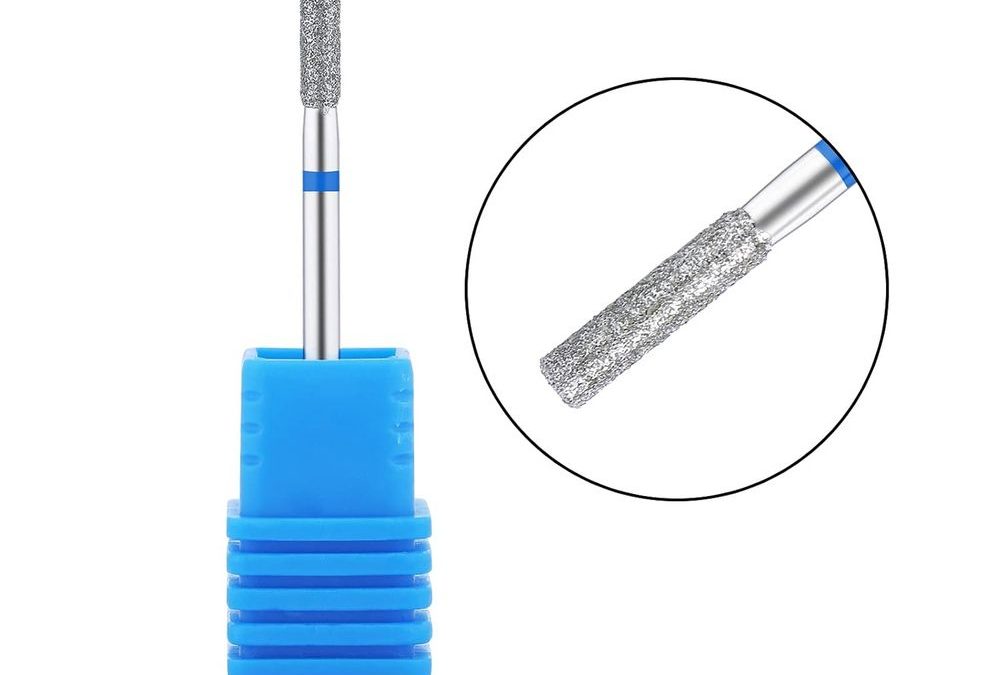
If you are new to powered cuticle work, relax: the column diamond cuticle technique can be learned methodically and will give you consistent, safe results when you follow speed, angle and pressure rules. This guide walks you through clear if/then decisions using the fine diamond sanding column bit with its gold-bronze grit, metallic silver shaft and royal blue band so you know exactly when and how to use it.
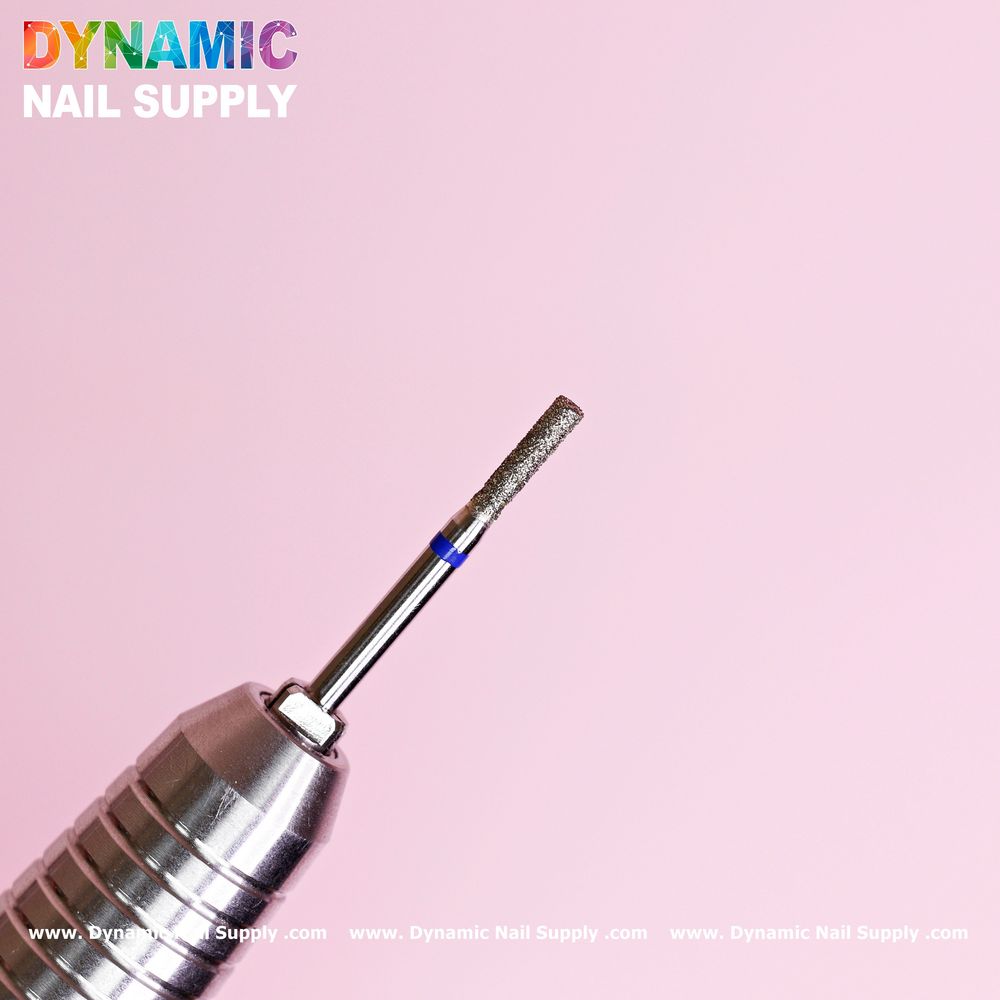
Gold-bronze grit column bit against a pale-pink backdrop.
Prepare Your Setup
If your e-file and handpiece are ready and accept a chrome-style chuck, proceed; if they do not, stop and fit a compatible handpiece. Use good lighting, position the client comfortably with arm support, and choose a fresh, extra-fine column bit for cuticle edge work. If you are training someone new, lower chair and extra hand support will make learning steadier.
Pre-Service Decisions
If the client has intact, thin eponychium and you need only light polishing and sealing, choose a conservative approach: low RPMs, short passes and a light touch. If there is visible dead skin build-up or adherent cuticle that must be removed for a clean prep, select the coarse-looking gold-bronze grit column tip but plan for lower speeds and careful control rather than forceful filing.
Speed And Direction
If you are uncertain about heat or client comfort, start at 10,000 rpm; if you need slightly more cutting power while keeping comfort, increase toward 15,000 rpm. Do not exceed the suggested range for routine cuticle work. The extra-fine column profile is bidirectional, so if your dominant hand favours clockwise strokes use them; if you switch hands or are ambidextrous, you may run it counter-clockwise without changing technique.
Angle And Stroke
If the goal is to clear dead skin from the lateral fold and under the free edge, approach the cuticle at a shallow 10–20 degree angle with short brushing strokes, keeping the shaft nearly parallel to the nail plate. If you need to smooth the natural nail surface before product application, flatten the stroke slightly and make longer, light passes across the plate while maintaining minimal pressure so you do not remove structure.
Pressure Control
- If the bit drags or the client feels heat, reduce pressure immediately and shorten your stroke length.
- If you see a rapid removal of material, ease off: the coarse-looking diamond grit removes efficiently when combined with higher RPMs.
- If working close to the lateral cuticle, use feather-light contact and keep strokes under one second in the most sensitive zones.
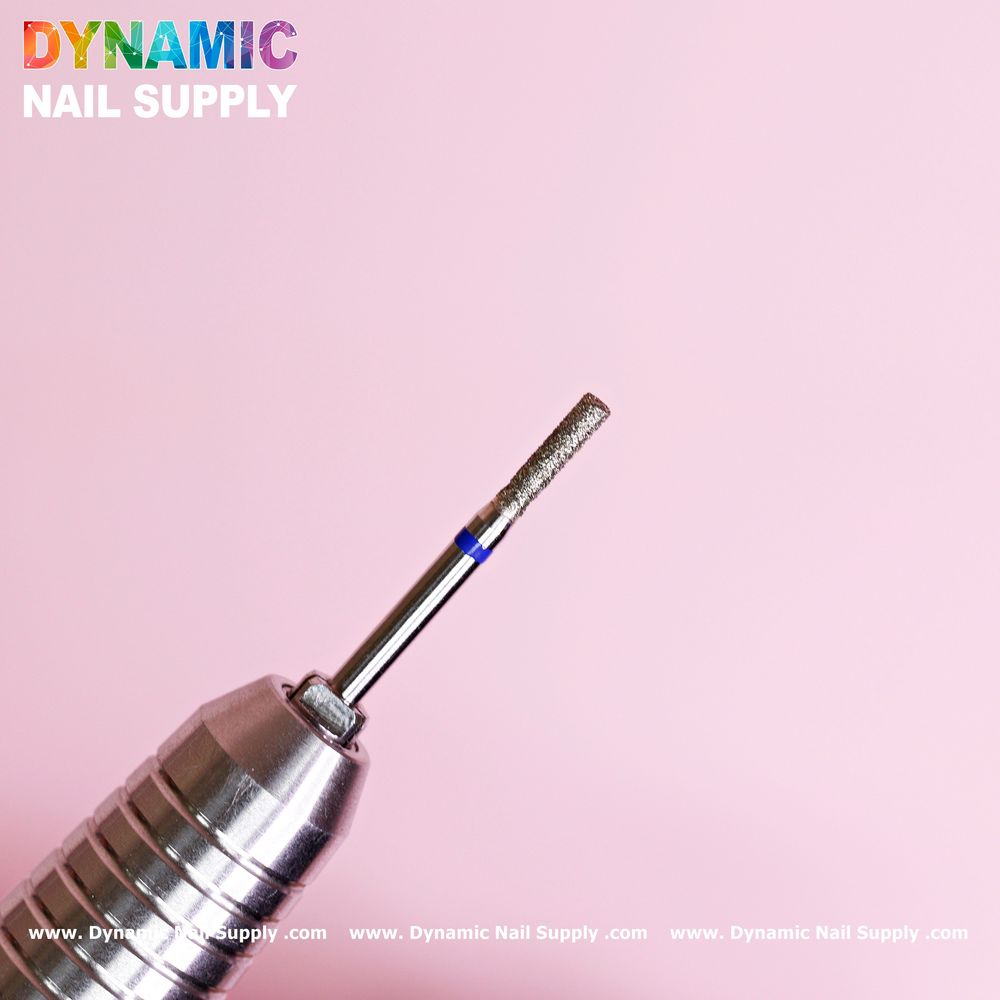
Metallic silver shaft with a visible royal blue band.
When To Stop
If the cuticle edge looks clean, the eponychium moves freely and there is no pinching or bleeding, you are done; if you still see adhered tissue, reassess speed, angle and pressure before repeating. Never linger in one spot: move the bit continuously and return only with shorter, lighter strokes.
Hygiene And Care
If you finish a full service, remove visible debris from the column grit with a stiff brush and follow your salon’s bit cleaning and sterilization protocol; if the bit shows excessive wear or clogging that cleaning cannot remedy, replace it. Store bits in a dry case and label by grit or function to speed selection during services.
For reference and to check the product details while you plan your kit, see the specific column diamond cuticle bit here: https://dynamicnailsupply.com/products/fine-sanding-cylinder-cuticle-drill-bit-f-carbide-use-for-cleaning-cuticle-and-natural-nails
Safety Notes
Use only within the recommended RPM range and keep strokes short to avoid heat build-up; if a client reports discomfort, stop immediately and reassess technique. Avoid pressing into living tissue and never use the bit on open wounds or active infections. Wear appropriate PPE and follow salon sanitation rules.
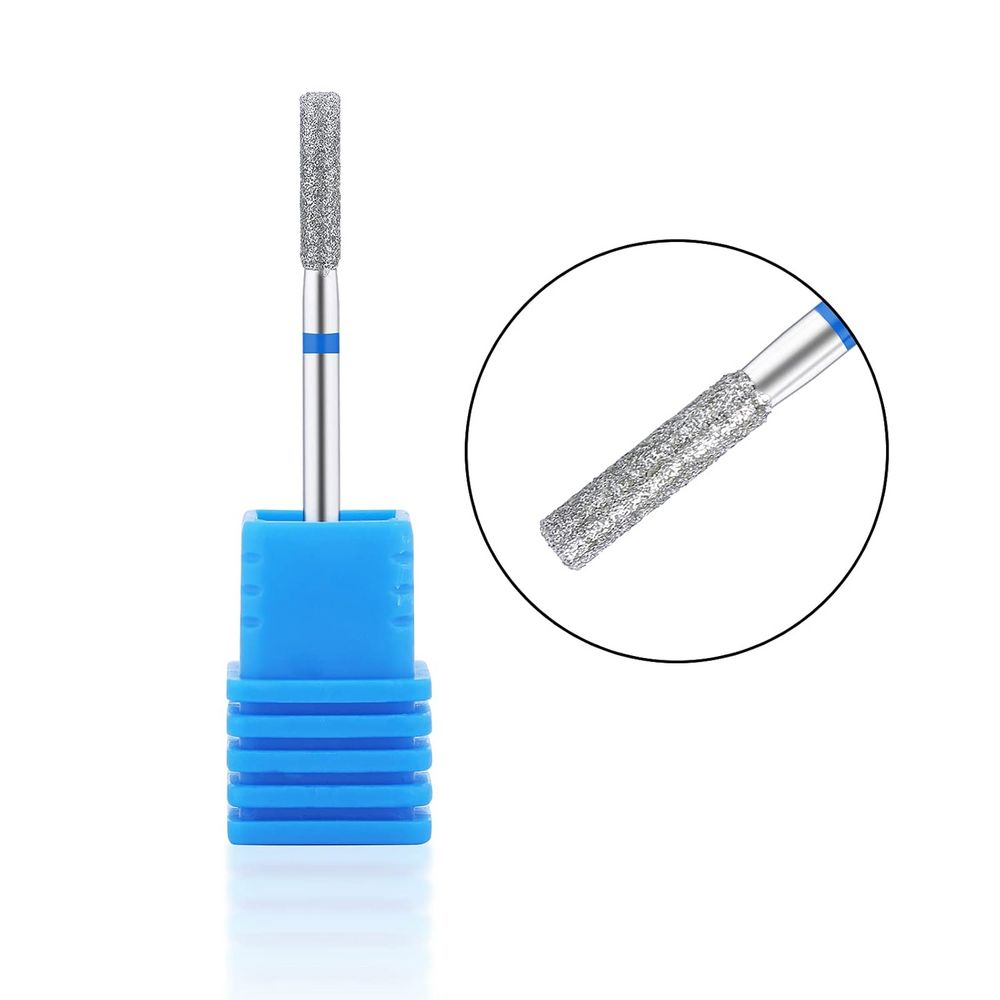
Chrome chuck and textured diamond tip in close focus.
Mini Glossary
- Column bit: A straight, cylindrical diamond sanding head used for edge and under-nail cleaning.
- Eponychium: The skin at the base of the nail plate that should be cleaned, not aggressively removed.
- RPM: Revolutions per minute; the tool speed recommended for this extra-fine column is 10k–15k.
Final verdict: If you need a focused, safe tool for removing dead skin and refining the cuticle edge, use the fine diamond sanding column (gold-bronze grit, metallic silver shaft with royal blue band) with low pressure and 10k–15k rpm; it offers reliable control for both left- and right-handed strokes and will give a clean prep when you follow the steps above.